


 English
 中文简体
中文简体
 Español


Specifying 304 stainless steel castings usually closes two questions at once: the metallurgical requirement for corrosion resistance and the practical need for manufacturability. For OEM engineers and sourcing teams, 304 is the default austenitic grade for parts that must survive food contact, marine air, or chemical washdowns, while still being weldable and machinable after the casting stage. If your component needs a durable metal body that does not require exotic tooling or long lead times, 304 is usually the right starting point.
Content
304 Stainless Steel: The Workhorse of Investment Castings
The alloy's balance of chromium, nickel, and manganese is what makes it a workhorse. A typical composition for 304 stainless steel castings is approximately 18-20% chromium and 8-10.5% nickel, with carbon limited to 0.08% maximum. The chromium forms a passive oxide layer on the surface, which gives the material its self-healing corrosion resistance. Nickel strengthens the austenitic structure, providing toughness down to cryogenic temperatures.
| Element | Composition Range |
|---|---|
| Chromium (Cr) | 18.0 - 20.0% |
| Nickel (Ni) | 8.0 - 10.5% |
| Manganese (Mn) | 2.0% max |
| Silicon (Si) | 1.0% max |
| Carbon (C) | 0.08% max |
| Phosphorus (P) | 0.045% max |
| Sulfur (S) | 0.03% max |
| Iron (Fe) | Balance |
Mechanical properties of 304 castings typically show a minimum tensile strength of 515 MPa, a yield strength of 205 MPa, and elongation around 40% in the solution-annealed condition. These values matter for components such as pump housings, valve bodies, and food-processing fittings, where the cast part carries pressure or vibration. Because 304 also withstands elevated temperatures up to 800°C in oxidation, it is a practical choice for burner parts and heat-exchanger components.
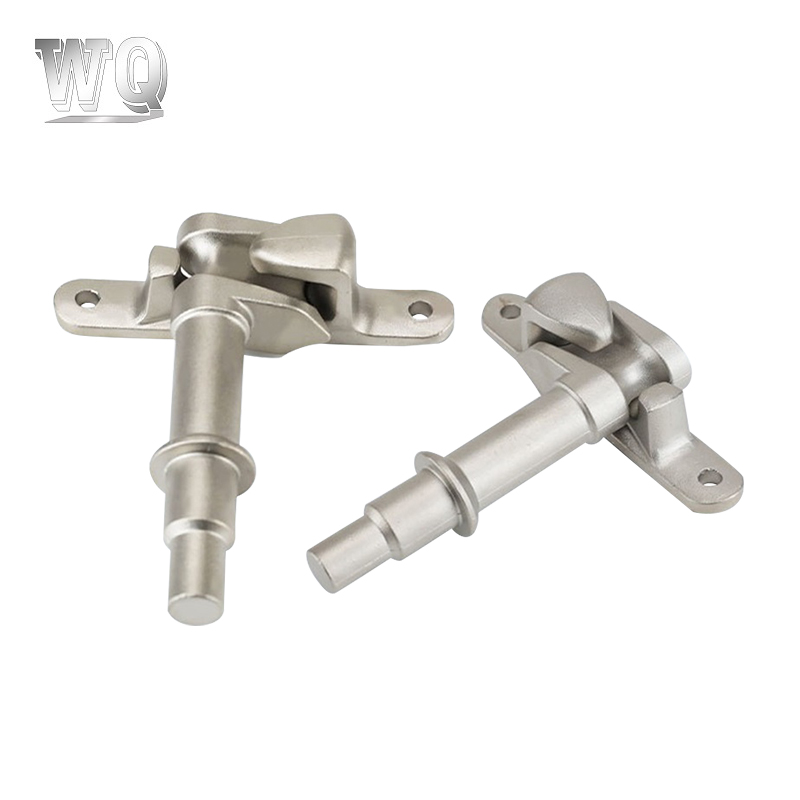
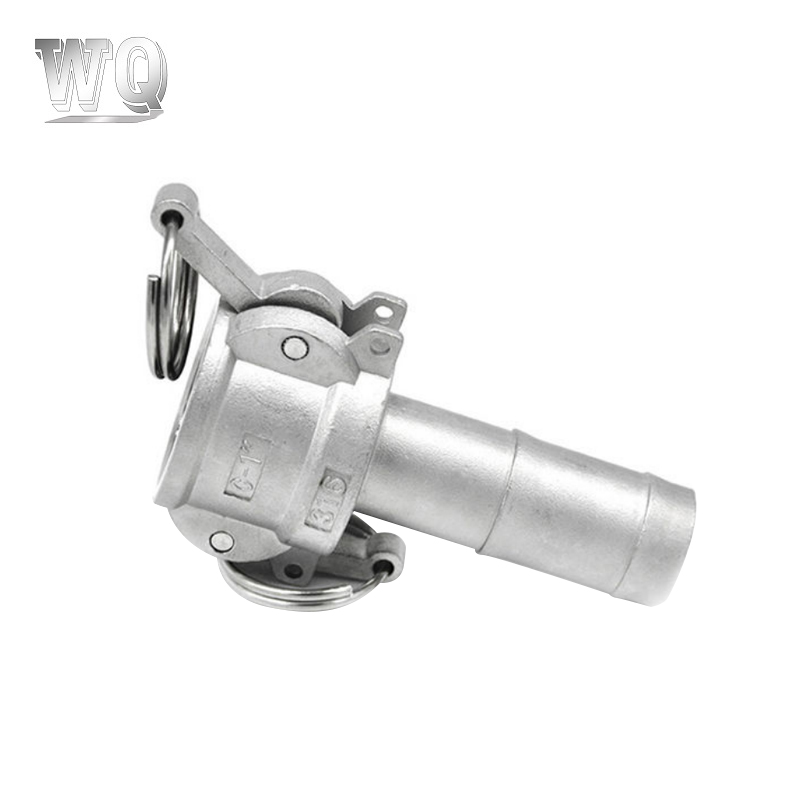
 304/304L Stainless Steel Castings with Precision Investment ProcessesExplore 304/304L stainless steel castings produced via silica sol, water glass, and shell-mold casting, offering various surface finishes and tolerance levels for demanding applications.View Product →
Casting Processes for 304 Stainless Steel
304 can be cast through several routes, and the process selection changes the part quality and cost structure. Investment casting, which includes both silica sol and water glass shell systems, is the dominant method for precision stainless steel castings. Silica sol investment casting produces a fine surface finish and tight dimensional tolerances, commonly reaching CT5-CT6 for small to medium-sized components. Water glass investment casting is a lower-cost alternative that still delivers good detail, but with a slightly rougher surface and wider tolerances. For larger or simpler components, shell-mold casting with resin-coated sand becomes the economical option.
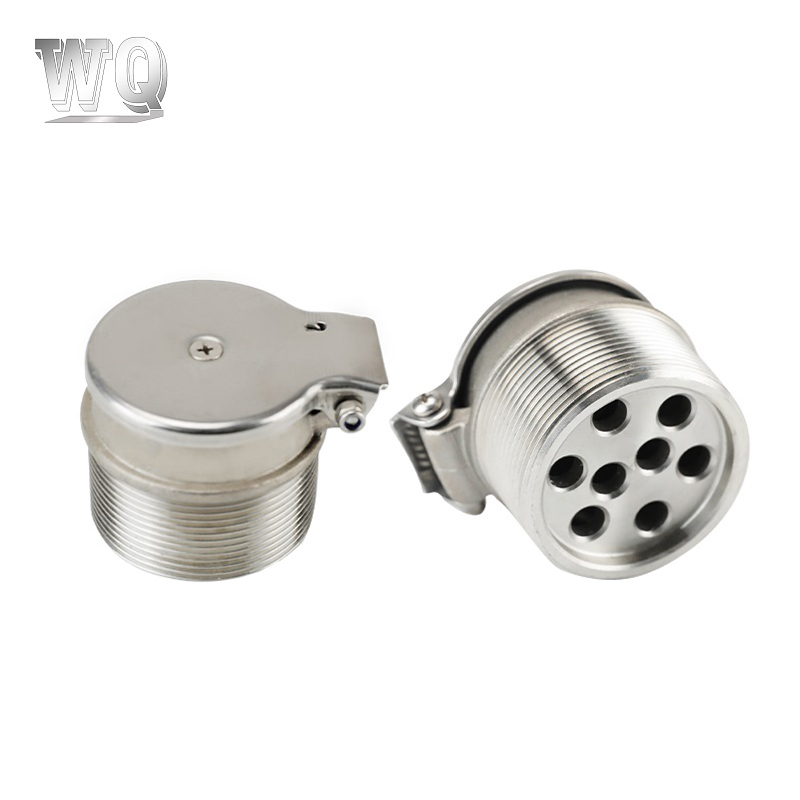
Stainless Steel Investment Casting with In-House MachiningStainless steel investment casting that combines precision casting with complete machining capabilities to address work hardening and tolerance transfer risks.View Product →
Investment casting gets the raw shape close to final dimensions, but 304 stainless steel is not always easy to machine. The grade is known for work hardening, so successful production depends on the foundry having a complete machining line in-house, with sharp tooling and controlled feeds. When a foundry combines casting and machining under one roof, it reduces tolerance transfer errors and shortens delivery chains. This is one reason many OEM buyers prioritize suppliers that can take the part from liquid metal to finished component.
Key Applications for 304 Stainless Steel Castings
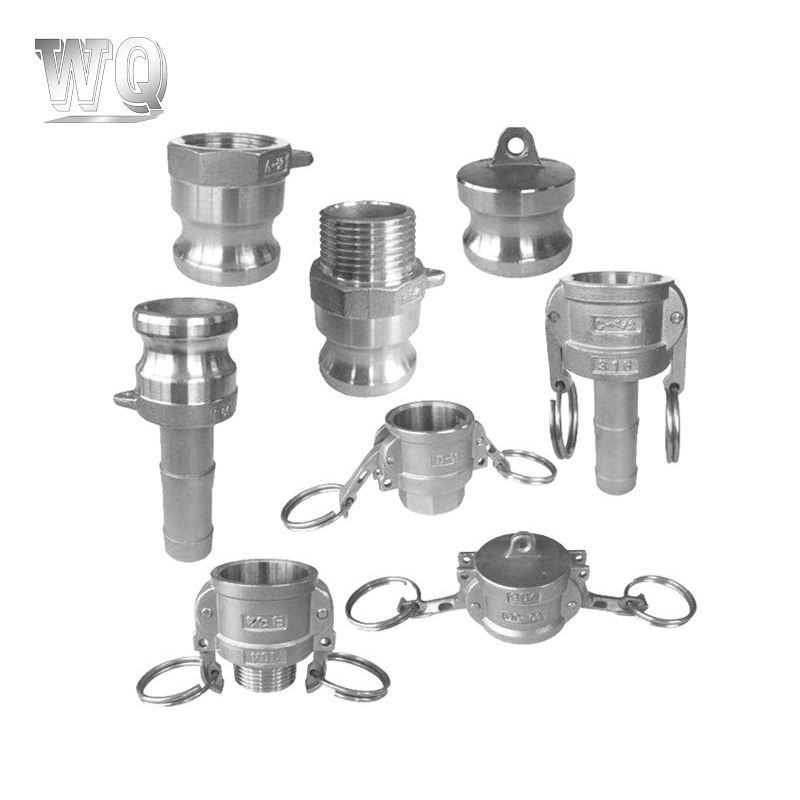
304 stainless steel castings appear wherever hygiene, corrosion resistance, and cleanability are non-negotiable. In the food and beverage industry, they are used for pump bodies, valve components, and fittings that come into contact with food products. Marine equipment relies on 304 for deck hardware and pump housings exposed to saltwater. The chemical processing industry uses 304 castings for valve bodies and manifold components that handle aggressive media. Commercial kitchen and ice cream machinery also benefit from 304 due to its resistance against organic acids and easy cleaning.
Understanding the technical behavior of 304 in service conditions is just as important as the starting composition. A detailed review of stainless steel casting applications and endurance considerations provides a broader perspective on how the grade performs under real-world loads.
What to Consider When Sourcing 304 Stainless Steel Castings
Even with a well-defined material grade, sourcing 304 castings has several traps. The first is confirming the actual carbon content. Standard 304 has a max carbon limit of 0.08%, but in service environments that promote weld decay, a low-carbon grade such as 304L (max 0.030% carbon) is often preferred. A material certification or test report should be attached to every heat.
The second is surface quality. Cast surfaces on 304 can show micro-shrinkage or oxide inclusions if the shell system, pouring temperature, and gating design are not optimized. For sealing surfaces or food-contact areas, request visual inspection or dye penetrant testing on the critical zones.
The third is machining allowance. If your drawing requires tight bores or threads, the foundry must understand the final machining envelope before creating the tooling. A casting designed without allowance for machining can push costs up or force secondary operations that a supplier should have anticipated.
- Material certificates: Request mill test certificates to verify the full heat chemistry for every lot.
- Tolerance and surface: For critical sealing surfaces, ask whether the foundry controls CT6 or tighter.
- Machining capability: Inquire whether the supplier performs CNC turning and milling after casting.
- Prototype vs. production: Confirm that the foundry can handle both small pilot runs and high-volume pours.
A broad product range can identify whether a supplier also covers other casting alloys, such as copper or aluminum, for multi-material projects.
Partnering with a Dedicated Casting Foundry
A reliable 304 stainless steel casting supplier must control the process from pattern and shell to heat treatment and machining. Choosing a partner with a dedicated precision casting facility and machining workshop simplifies the supply chain. With verified casting throughput and export experience, a foundry can support OEM builds without introducing unexpected delays.
If you are evaluating a supplier, ask for recent examples of 304 castings that required both investment casting and post-cast machining. That combination signals a supplier that understands the material, not just the mold. Contact us to review your drawings and get a feasibility assessment for 304 or other stainless steel grades.