


 English
 中文简体
中文简体
 Español


When a valve body or pump impeller is specified for service involving chlorides, seawater, or food processing, 316L stainless steel castings are often the safest default choice. The grade combines the corrosion resistance of a molybdenum-bearing austenitic stainless steel with a maximum carbon content of 0.03%, which protects the material from the grain-boundary corrosion that can follow welding. In cast form, the same alloy is usually certified as ASTM A351 CF3M, and understanding that designation is the first step to buying parts that meet your real service requirements.
The practical summary is this: choose 316L castings when your part must resist pitting and crevice corrosion, when it will be welded during fabrication or repair, and when the geometry is complex enough to benefit from investment or sand casting. The sections below explain the metallurgy, the casting processes, the applications, and the documentation you should request from a foundry.
Content
316L vs 316 in Castings: The CF3M Difference
Both 316 and 316L are austenitic grades containing chromium, nickel, and molybdenum. The only intended difference is carbon. Wrought 316L limits carbon to 0.03% maximum, while 316 permits up to 0.08%. When the same alloy is cast, the equivalent ASTM designations apply: CF8M for 316 and CF3M for 316L. The numbering convention is informative: the first digit after the C indicates the maximum carbon content in hundredths of a percent, so CF3M is the low-carbon counterpart of CF8M.
Carbon content matters because of sensitization. When the alloy is heated in the 425-870°C range, which is exactly what happens during welding, carbon migrates to grain boundaries and combines with chromium to form chromium carbide. The chromium-depleted zones that remain are vulnerable to intergranular corrosion. By holding carbon at or below 0.03%, 316L greatly reduces this risk. For castings that are welded into pipe assemblies, welded to support structures, or welded for repair after years in service, this behavior is decisive.
| Element | Wrought 316L (%) | Cast CF3M (ASTM A351) (%) |
|---|---|---|
| Carbon | 0.030 max | 0.03 max |
| Chromium | 16.0-18.0 | 17.0-21.0 |
| Nickel | 10.0-14.0 | 9.0-13.0 |
| Molybdenum | 2.00-3.00 | 2.00-3.00 |
| Manganese | 2.00 max | 1.50 max |
| Silicon | 0.75 max | 1.50 max |
| Phosphorus | 0.045 max | 0.040 max |
| Sulfur | 0.030 max | 0.040 max |
Notice that molybdenum stays at 2.00-3.00% in both forms. Molybdenum is the element responsible for the alloy's resistance to pitting in chloride-bearing media, and it is the main reason 316L costs more than 304L and delivers more in aggressive service.
Corrosion Resistance That Justifies the Grade
316L castings resist general attack in many acids, including phosphoric and dilute sulfuric acids, and they perform well in marine atmospheres and in seawater at moderate temperatures. The pitting resistance equivalent number, abbreviated PREN, of 316L is typically above 24, compared with about 19-20 for 304. In practical terms, the higher PREN means fewer pitting failures in chemical plants, coastal installations, and food processing lines where chlorine-based sanitizers are part of daily washdown.
That does not make 316L a universal remedy. In stagnant seawater, tight crevices, or chloride-rich streams at temperatures above roughly 40-50°C, pitting and crevice corrosion can still develop. Specifiers who face those conditions may move to duplex or super-austenitic grades. The correct approach is to match the grade to the actual service environment rather than assuming that the name "stainless" covers every situation.
Which Casting Process Suits 316L Parts
Because 316L is fully austenitic, it solidifies with a coarse dendritic structure that makes feeding of shrinkage more demanding than in ferritic steels. The foundry has to design the gating and riser system carefully to avoid microporosity in thick sections, and experienced shops control pouring temperature and cooling rates closely. Nondestructive examination, such as radiography or ultrasonic testing, is common for parts that will hold pressure.
Investment casting is the preferred process for complex 316L parts such as pump impellers, valve internals, and food processing components that need smooth surfaces and tight tolerances. The ceramic shell mold preserves fine detail, and the as-cast surface is consistently smoother than sand-cast surfaces, which reduces machining time and scrap. For parts with intricate internal passages, investment casting is difficult to beat.
 Stainless Steel Investment Casting Manufacturer for Complex 316L PartsThis supplier offers precision casting for stainless, carbon, and low alloy steels using silica sol, water glass, and film sand methods. Its investment casting suits intricate 316L components like impellers and valve internals.View Product →
Sand casting, including resin-bonded molds and water-glass shell molding, remains a practical route for larger valve bodies and housings where the slightly rougher surface and wider tolerances are acceptable. Machining 316L calls for sharp inserts and consistent feeds, because austenitic stainless steel work-hardens quickly when the tool starts to rub. A shop that handles castings and machining in one facility can avoid the miscommunication that often occurs when a part is cast by one supplier and machined by another.
Typical Applications for 316L Castings
Specifiers select 316L castings for equipment that is cleaned with strong chemicals, that operates near salt water, or that needs to remain hygienic under frequent sanitizing. The grade is common in these areas:
- Pump casings and impellers for chemical transfer and marine service
- Valve bodies and trim for corrosive or high-purity fluids
- Heat exchanger components and pipe fittings
- Pharmaceutical vessel and mixing hardware
- Food and beverage processing parts exposed to chlorine-based cleaners
Welding behavior is another reason the grade is chosen. Because the low carbon content limits carbide precipitation, 316L castings can be welded into larger assemblies without the post-weld annealing that 316 often requires, which is a real saving in fabrication shops.
For a closer look at where these parts deliver their best service life, see our industry article on the applications of stainless steel casting parts and the secret to their endurance.
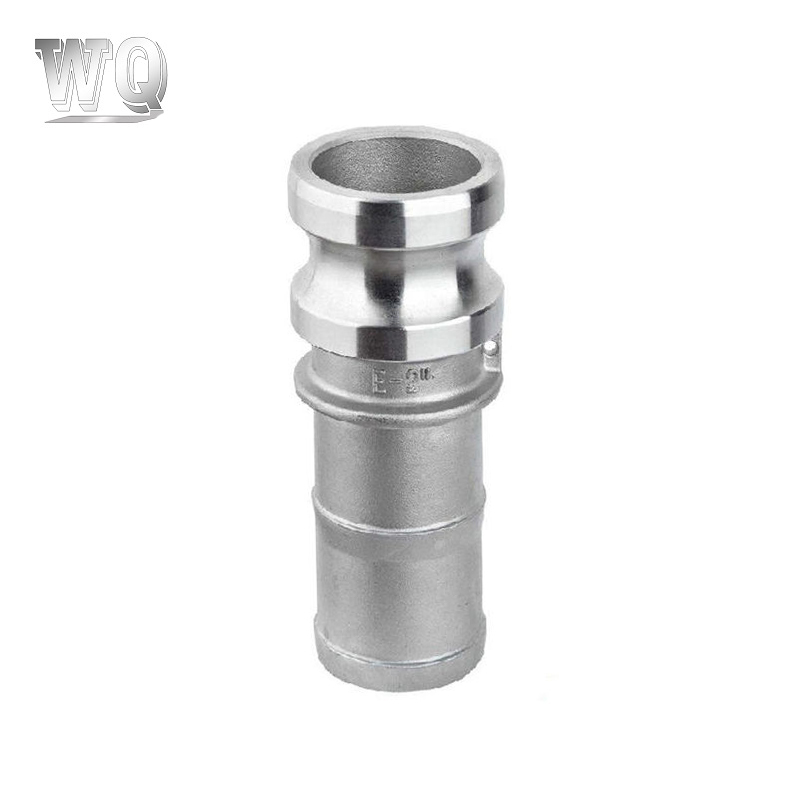
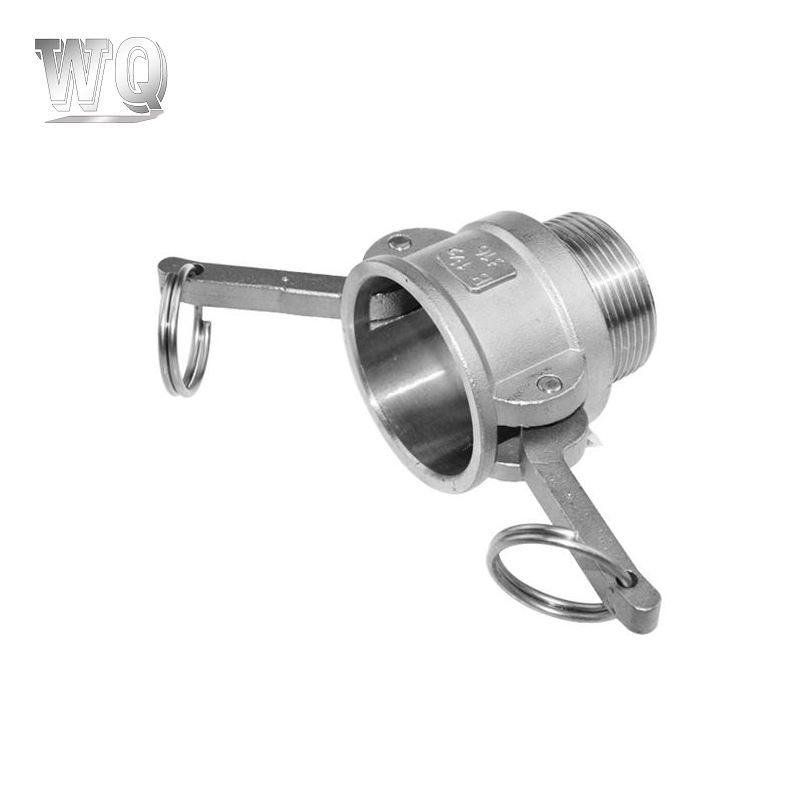
316/316L Stainless Steel Castings Supplier with Material CertificationThis manufacturer provides 316L castings for aggressive environments. Supporting supply of tube connectors, camlock couplings, and high-temperature alloys, it can deliver parts meeting ASTM specifications and heat treatment documentation.View Product →Documentation and Quality Checks Before You Order
Order against a recognized casting specification, normally ASTM A351 grade CF3M or ASTM A743, or an equivalent customer standard. The foundry should provide a material certificate that lists the heat number, the chemical analysis, and the heat treatment details. Solution annealing for CF3M is usually performed at 1040-1120°C followed by rapid cooling, and that step should be documented because it restores corrosion resistance after casting.
Define acceptance criteria before production begins: surface roughness, dimensional tolerances, and internal soundness. For pressure-retaining parts, specify a radiographic examination standard and an acceptance level. Positive material identification on finished parts can quickly confirm that the molybdenum content is present and that no 304 was substituted in the process.
Also decide how the parts will be delivered: as-cast, solution-annealed, or with machining allowance for your own finishing. These choices directly affect price and lead time. When chlorides are absent and expected service is mild, 304/304L castings are often sufficient; when the environment is aggressive, the extra cost of 316L is far cheaper than an early failure.
304/304L Stainless Steel Castings Manufacturer for Mild ServiceFor applications without chlorides and with less demanding conditions, this supplier offers 304/304L castings. It also produces stainless steel investment and die castings, copper alloys, and related parts, helping select cost-effective materials.View Product →
Engineers who understand the CF3M designation, verify the chemistry, and match the casting process to the geometry tend to get parts that remain in service for decades. The 316L grade itself is proven. The remaining risk sits in the specification details and in the foundry's quality control, so both deserve as much attention as the material grade.