


 English
 中文简体
中文简体
 Español


Content
- 1 Why Casting Remains Central to Automotive Part Manufacturing
- 2 The Main Casting Methods Used for Auto Parts
- 3 Casting Method Comparison for Automotive Applications
- 4 Materials Used in Automotive Casting and Their Trade-offs
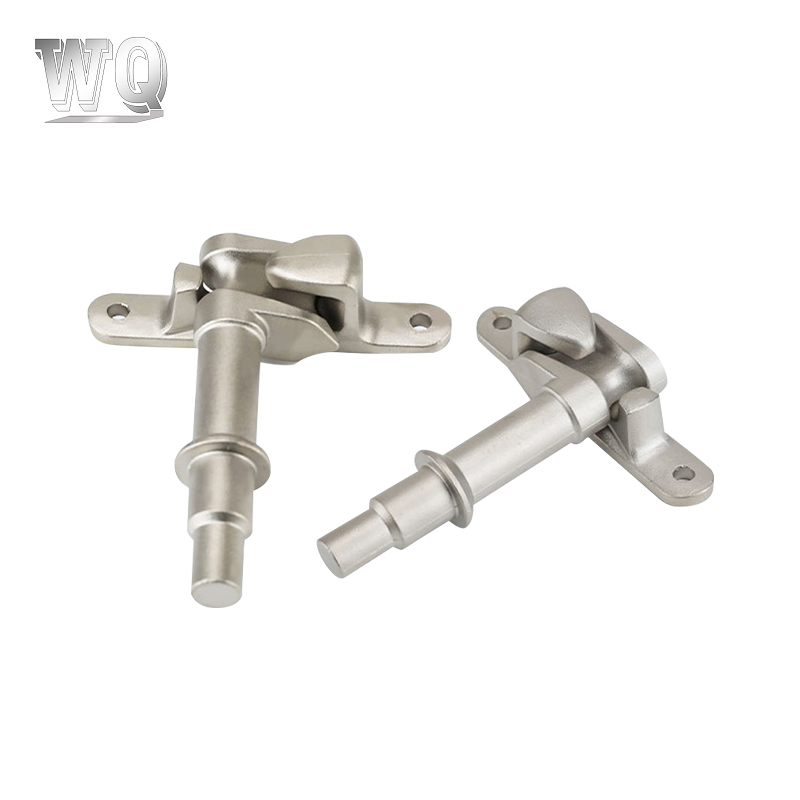
- 5 Which Auto Parts Are Most Commonly Cast
- 6 Mega Casting and Structural Casting: The Shift in EV Manufacturing
- 7 Quality Control in Automotive Casting
- 8 How to Evaluate a Casting Supplier for Auto Parts
Why Casting Remains Central to Automotive Part Manufacturing
Casting is the process of pouring molten metal into a mold to produce a shaped part once it solidifies. It is the dominant manufacturing method for complex, high-volume automotive components — from engine blocks and cylinder heads to brake calipers, transmission housings, and suspension knuckles. No other process combines geometric freedom, material efficiency, and production scalability as effectively for parts that must be both structurally strong and geometrically complex.
The global automotive casting market was valued at over $50 billion in 2023, reflecting how deeply embedded this process is in vehicle production. A typical passenger car contains between 200 and 300 kg of cast components, spanning the powertrain, chassis, and body structure. As vehicles shift toward electric powertrains and lightweight platforms, casting methods and materials are evolving — but casting itself is not being displaced.
The Main Casting Methods Used for Auto Parts
Not all automotive castings are made the same way. The casting method selected determines surface finish, dimensional accuracy, minimum wall thickness, tooling cost, and production rate. Four methods account for the vast majority of automotive casting production.
Die Casting
Die casting forces molten metal into a hardened steel mold (die) under high pressure — typically 1,500 to 30,000 psi. The process produces parts with excellent dimensional accuracy, smooth surface finish, and thin walls down to 1–2 mm. Cycle times are short, often under 60 seconds per part, making die casting ideal for high-volume production.
Die casting is used almost exclusively with non-ferrous metals: aluminum, zinc, and magnesium. Common automotive applications include transmission housings, engine covers, oil pans, pump bodies, and EV battery housings. Tooling costs are high — a production die can cost $50,000 to $300,000 — but the per-part cost drops sharply at volumes above 10,000 units.
Sand Casting
Sand casting uses a compacted sand mold that is destroyed after each pour. It is the most flexible casting process, capable of producing parts ranging from a few grams to several tonnes. Dimensional tolerances are wider than die casting, and surface finish is rougher, but tooling costs are low and lead times are short — a sand casting pattern can be made for a few hundred to a few thousand dollars.
Sand casting is used for gray iron and ductile iron engine blocks, cylinder heads, exhaust manifolds, and differential housings. It remains the preferred method for low-to-medium volume production and for parts where internal complexity — such as cooling passages in engine blocks — requires sand cores that cannot be replicated by die casting.
Investment Casting (Lost Wax)
Investment casting produces parts by surrounding a wax pattern in ceramic slurry, burning out the wax, and pouring metal into the resulting ceramic shell. It delivers the tightest dimensional tolerances of any casting process — typically ±0.1 mm — and can produce highly intricate geometries with undercuts, thin walls, and fine surface detail without secondary machining.
In automotive use, investment casting is applied to turbocharger housings, exhaust components in stainless or heat-resistant alloys, fuel injection parts, and performance suspension components. It is slower and more labor-intensive than die or sand casting, making it best suited for lower volumes where geometric complexity or alloy selection justifies the cost.
Permanent Mold Casting (Gravity Die Casting)
Permanent mold casting pours molten metal into a reusable metal mold by gravity rather than pressure. It produces better surface finish and tighter tolerances than sand casting, without the high tooling cost of pressure die casting. The molds are typically made from tool steel or cast iron and can last for 10,000 to 100,000 cycles depending on the alloy poured.
This method is widely used for aluminum cylinder heads, pistons, and wheel hubs in medium-volume programs. It bridges the gap between the flexibility of sand casting and the productivity of die casting, and it produces parts with lower porosity than high-pressure die casting, which is important in structural or pressure-containing applications.
Casting Method Comparison for Automotive Applications
The table below summarizes how the four primary casting methods compare across the factors most relevant to automotive part production decisions:
| Method | Tooling Cost | Dimensional Accuracy | Best Volume Range | Compatible Metals |
|---|---|---|---|---|
| High Pressure Die Casting | Very High | High (±0.2 mm) | 10,000+ units | Al, Zn, Mg |
| Sand Casting | Low | Moderate (±0.5–1 mm) | 1 – 10,000 units | Iron, Steel, Al, Cu |
| Investment Casting | Medium | Very High (±0.1 mm) | 100 – 50,000 units | Steel, SS, Al, Ni alloys |
| Permanent Mold Casting | Medium | Good (±0.3 mm) | 1,000 – 100,000 units | Al, Mg, Cu alloys |
Materials Used in Automotive Casting and Their Trade-offs
Material selection is as consequential as process selection. The metal used determines the part's strength, weight, heat resistance, machinability, and cost.
Gray Cast Iron
Gray iron has been the backbone of automotive casting for over a century. It offers excellent castability, good vibration damping, and high compressive strength. Its tensile strength is lower than steel — typically 150–400 MPa — but it is self-lubricating due to free graphite flakes, making it well-suited for cylinder liners, brake drums, and engine blocks in applications where weight is not the primary concern.
Ductile (Nodular) Iron
Ductile iron adds magnesium to the melt to convert graphite from flakes to spheroids, dramatically improving tensile strength (up to 800 MPa) and elongation compared to gray iron. This makes it suitable for crankshafts, camshafts, steering knuckles, and suspension components that experience cyclic loading. Ductile iron is increasingly replacing steel forgings in structural chassis parts due to its lower cost and comparable fatigue performance.
Aluminum Alloys
Aluminum castings have expanded rapidly as automakers pursue lightweighting targets. Aluminum is approximately one-third the density of iron at 2.7 g/cm³ vs. 7.2 g/cm³, and modern alloys like A380 (die casting) and A356 (permanent mold and sand casting) achieve tensile strengths of 300–330 MPa after heat treatment. Aluminum is now used for engine blocks, cylinder heads, transmission cases, suspension components, and increasingly for large structural castings in EV platforms.
Magnesium Alloys
Magnesium is the lightest structural metal used in automotive casting at 1.74 g/cm³ — 35% lighter than aluminum. AZ91D is the most common die casting alloy, used for instrument panel structures, transfer case housings, and seat frames. Despite its weight advantage, magnesium is more expensive than aluminum, has lower corrosion resistance, and requires careful fire safety protocols during casting and machining, limiting its use to targeted weight-critical applications.
Steel and Stainless Steel
Cast steel is used where maximum strength and impact resistance are needed — tow hooks, axle housings, and heavy-duty suspension parts. Stainless steel investment castings are used for exhaust manifolds, turbocharger housings, and EGR components where operating temperatures exceed 800°C and corrosion resistance is required alongside heat tolerance.
Which Auto Parts Are Most Commonly Cast
Across the vehicle, casting is applied wherever the combination of complex geometry, load-bearing requirements, and production volume makes other processes uncompetitive:
| Vehicle System | Component | Typical Material | Common Method |
|---|---|---|---|
| Powertrain | Engine block | Gray iron / Aluminum | Sand casting |
| Powertrain | Cylinder head | Aluminum alloy | Sand / Permanent mold |
| Powertrain | Transmission housing | Aluminum alloy | High pressure die casting |
| Braking | Brake caliper | Gray iron / Aluminum | Sand / Die casting |
| Suspension | Steering knuckle | Ductile iron / Aluminum | Sand casting |
| EV Platform | Battery enclosure / Giga casting | Aluminum alloy | High pressure die casting |
| Exhaust | Turbocharger housing | Stainless steel / Ni alloy | Investment casting |
Mega Casting and Structural Casting: The Shift in EV Manufacturing
One of the most significant recent developments in automotive casting is the emergence of mega casting (also called giga casting), pioneered by Tesla. Instead of assembling dozens of stamped steel parts and weld joints, a single large aluminum die casting replaces an entire rear or front underbody structure.
Tesla's Model Y rear underbody casting replaced approximately 70 individual parts and 700–800 weld points with a single casting weighing roughly 66 kg. This reduces manufacturing complexity, eliminates tolerance stack-up across joints, and shortens assembly line length significantly. The presses used for these parts exert 6,000 to 9,000 tonnes of clamping force — far beyond conventional automotive die casting equipment.
Other manufacturers including Toyota, Volvo, Hyundai, and Nio are now investing in similar large-format casting capabilities. The trend reflects a broader shift: casting is no longer just a way to make individual components — it is becoming a structural strategy for simplifying entire vehicle architectures.
Quality Control in Automotive Casting
Cast auto parts must meet stringent quality standards, particularly for safety-critical components. The most common defects and the controls used to detect them include:
- Porosity: Gas or shrinkage voids within the casting that reduce strength. Detected by X-ray inspection or CT scanning. Controlled through mold design, degassing treatment of the melt, and controlled solidification rates.
- Cold shuts: Seams where two streams of metal met but did not fully fuse, creating a plane of weakness. Caused by insufficient melt temperature or slow fill speed. Detected visually or by dye penetrant testing.
- Dimensional deviation: Warpage, shrinkage variation, or die wear causing parts to fall outside tolerances. Controlled by coordinate measuring machines (CMM) during production sampling and end-of-line gauging.
- Inclusions: Sand, oxide films, or slag trapped in the casting. Prevented by proper gating system design, melt filtration, and mold coating maintenance.
- Surface defects: Misruns, cold laps, and flash at parting lines. Most surface defects are caught by visual inspection and are remedied by process parameter adjustment or die maintenance.
Automotive OEM suppliers are typically required to maintain IATF 16949 certification, the automotive quality management standard, and to submit Production Part Approval Process (PPAP) documentation before mass production of any new cast component. These requirements push casting suppliers to maintain tight statistical process control and traceability throughout production.
How to Evaluate a Casting Supplier for Auto Parts
Whether sourcing for OEM production or aftermarket replacement parts, evaluating a casting supplier on the right criteria prevents costly quality failures and supply disruptions.
- Process capability for your part geometry. Not every foundry can produce every type of casting. Confirm the supplier has experience with the specific alloy, process, and part complexity you require — not just general casting capability.
- Quality certifications. IATF 16949 is the minimum for automotive supply chain entry. ISO 9001 alone is insufficient for safety-critical parts. Ask for recent audit reports.
- Inspection equipment. A capable automotive casting supplier should have in-house CMM measurement, X-ray or CT inspection for internal defect detection, and spectrographic analysis for melt chemistry verification.
- PPAP and APQP capability. Production Part Approval Process submission requires dimensional reports, material certifications, and process flow documentation. Suppliers without this experience cannot meet OEM onboarding requirements.
- Tooling ownership and maintenance policy. Clarify who owns the die or pattern tooling, what the maintenance schedule is, and what happens to tooling at end of program life. Tooling disputes are one of the most common sourcing complications in casting supply.
- Capacity and lead time transparency. Ask for documented machine utilization rates and realistic lead times — not best-case figures. A foundry running at 95% capacity cannot absorb demand spikes without affecting delivery performance.