


 English
 中文简体
中文简体
 Español


Content
- 1 Why Stainless Steel Dominates BBQ Grill Component Manufacturing
- 2 Core BBQ Grill Stainless Steel Parts and Their Specifications
- 3 Grade Comparison: Choosing the Right Stainless Steel for Each Part
- 4 Sourcing BBQ Grill Stainless Steel Parts: OEM vs. Aftermarket
- 5 Maintenance Best Practices to Extend the Life of Stainless Steel Grill Parts
Why Stainless Steel Dominates BBQ Grill Component Manufacturing
Stainless steel has become the material of choice for BBQ grill parts — and the reasons go far beyond aesthetics. When exposed to repeated high-heat cycles, grease, marinades, and outdoor weather, most metals degrade rapidly. Stainless steel's chromium content (minimum 10.5% by weight) enables it to form a self-repairing passive oxide layer that resists rust, staining, and corrosion even under sustained thermal stress above 500°C (932°F).
From a manufacturing standpoint, stainless steel offers excellent formability, weldability, and surface finish consistency — critical properties when producing precision components like burner tubes, cooking grates, heat plates, and firebox assemblies at scale. These attributes explain why leading grill brands and OEM suppliers have standardized on stainless steel across their premium and commercial product lines.
The two grades most commonly specified for BBQ grill parts are:
- 304 Stainless Steel (18/8): Contains 18% chromium and 8% nickel. Excellent corrosion resistance, widely used for cooking grates, lids, side shelves, and burner covers. The industry benchmark for mid-to-high-end grills.
- 430 Stainless Steel (ferritic): Contains 16–18% chromium with no nickel. More affordable, magnetic, and adequate for lower-heat components like drip trays and cart frames — though less corrosion-resistant than 304 in coastal or high-humidity environments.
For commercial-grade or marine-environment applications, 316 stainless steel (with added molybdenum) is sometimes specified for burner assemblies and firebox interiors, offering superior resistance to chloride-induced pitting.
Core BBQ Grill Stainless Steel Parts and Their Specifications
A complete gas or charcoal grill assembly involves multiple stainless steel components, each with distinct engineering requirements. Understanding what each part does — and what makes one better than another — is essential for buyers sourcing replacement parts or OEM components.
Cooking Grates
Stainless steel cooking grates are judged on three factors: rod diameter, bar spacing, and surface finish. Heavier-gauge rods (9–10mm diameter) retain heat better and resist warping over thousands of heat cycles. Bar spacing of 10–13mm is the sweet spot for most grilling — narrow enough to prevent food fall-through, wide enough for proper grill marks. Brushed or satin finishes are preferred over polished surfaces, as they are less prone to showing grease residue and are easier to clean.
Burner Tubes
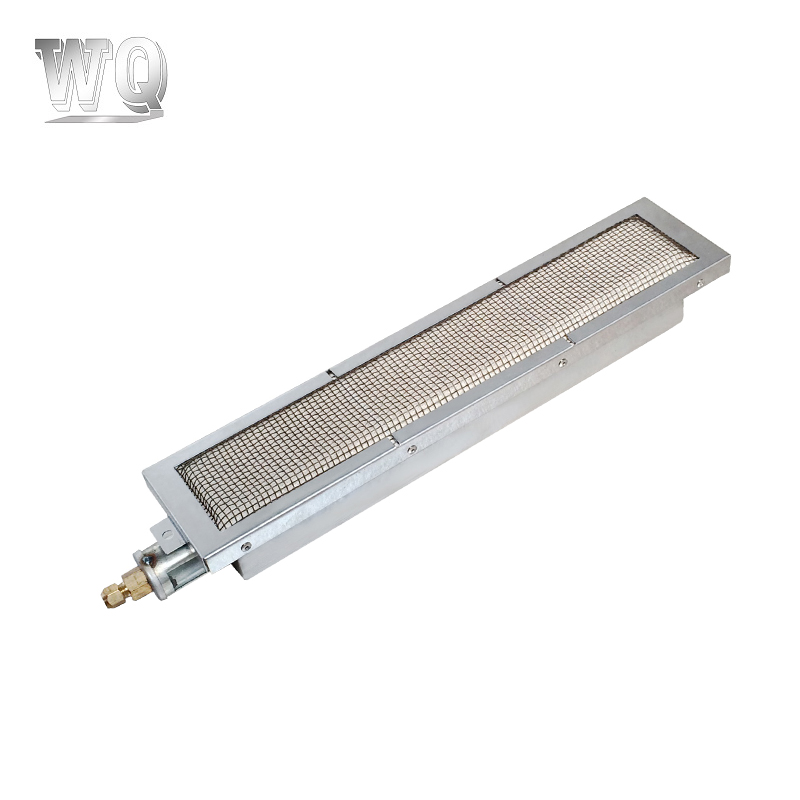
Burner tubes are among the highest-stress components in any gas grill. They must withstand continuous exposure to open flame, thermal cycling from ambient to over 600°C, and condensation from grease drip. Seamless or laser-welded 304 stainless steel tube burners significantly outperform their cast iron or aluminized steel counterparts, with service lives of 10+ years in residential use when properly maintained. Port hole diameter and spacing determine flame distribution uniformity — a critical performance variable that OEM suppliers optimize for each specific grill geometry.
Heat Plates and Flame Tamers
Heat plates (also called flavorizer bars, heat shields, or flame tamers depending on the brand) sit between the burners and the cooking grate. Their function is to vaporize dripping fats — creating the smoke that imparts flavor — while also protecting burners from direct grease contact. Stainless steel heat plates are pressed or roll-formed from 1.0–1.5mm sheet stock into angled V or tent profiles. Thicker gauge material (1.2mm and above) dramatically extends service life by resisting the burn-through that thinner plates suffer after prolonged use at high temperatures.
Firebox and Lid Assembly
The firebox (cooking chamber) and lid are the largest structural stainless steel components in a grill. Double-wall construction — two layers of 304 stainless with an air gap between them — provides significantly better heat retention and a cooler exterior surface compared to single-wall designs. Welded corner seams should be continuous and ground flush; intermittent spot welds are an indicator of lower-cost construction that is prone to warping and gap formation over time.
Grease Management Components
Drip trays, grease channels, and collection cups are often overlooked but critically important for both food safety and fire prevention. Stamped 430 or 304 stainless steel trays with rolled edges and a consistent slope toward the collection point are the standard specification. Trays with a bead-blasted or brushed interior surface are easier to degrease than smooth-polished equivalents, which tend to hold baked-on residue more aggressively.
Grade Comparison: Choosing the Right Stainless Steel for Each Part
| Grill Component | Recommended Grade | Key Reason | Typical Thickness/Size |
|---|---|---|---|
| Cooking Grates | 304 | Food-contact corrosion resistance | 9–10mm rod dia. |
| Burner Tubes | 304 / 316 | High-temp & grease exposure | 1.0–1.5mm wall |
| Heat Plates | 304 | Burn-through resistance | 1.2–1.5mm sheet |
| Firebox / Lid | 304 | Structural integrity & heat retention | 1.2–2.0mm sheet |
| Drip Trays | 430 / 304 | Cost-effective, lower heat exposure | 0.8–1.0mm sheet |
| Cart Frame & Side Shelves | 430 / 304 | Structural load-bearing, aesthetic finish | 1.2–1.5mm sheet |
Sourcing BBQ Grill Stainless Steel Parts: OEM vs. Aftermarket
The global BBQ grill parts market bifurcates into two primary sourcing channels: OEM (Original Equipment Manufacturer) supply — where parts are manufactured to a brand's exact specification — and the aftermarket replacement parts segment. Each has distinct quality, pricing, and lead time implications for buyers.
OEM Supply Chains
Major grill brands typically partner with dedicated stainless steel fabrication facilities — concentrated in China (Guangdong, Zhejiang), Taiwan, and South Korea — for their component supply. OEM contracts specify material certifications (mill test certificates for 304 or 316 grade), dimensional tolerances, weld inspection criteria, and surface finish standards. Minimum order quantities for OEM parts commonly range from 500 to 5,000 units per SKU, making direct OEM sourcing practical only for brands and large importers with sufficient volume.
Aftermarket Replacement Parts
The aftermarket segment serves both end consumers replacing worn components and retailers building private-label accessory lines. Quality in this segment varies considerably. Buyers should request material grade documentation and, where possible, verify stainless grade using a magnet (304 is weakly magnetic to non-magnetic; strongly magnetic parts are likely 430 or lower-grade material). Reputable aftermarket suppliers will provide dimensional compatibility data cross-referenced against major grill brand model numbers — a critical factor since burner and grate dimensions are highly brand-specific.
Key Quality Verification Criteria for Buyers
- Mill Test Certificates (MTC): Request EN 10204 3.1 or equivalent certification confirming steel grade and chemical composition for every production batch.
- Weld Integrity: For welded components like burner tubes and grate frames, request dye penetrant or hydrostatic test reports from suppliers processing commercial volumes.
- Surface Treatment: Confirm whether brushed, polished, or passivated finishes are applied post-fabrication. Passivation (acid treatment per ASTM A967) removes free iron from cut edges and weld zones, restoring full corrosion resistance.
- Dimensional Tolerance Sheets: Essential for replacement grates and burners that must fit specific grill models — even minor deviations in overall dimensions or port spacing affect fit and performance.
Maintenance Best Practices to Extend the Life of Stainless Steel Grill Parts
Even high-quality stainless steel grill components require proper care to achieve their maximum service life. The most common cause of premature degradation is not heat — it is the combination of chlorides from coastal air or certain marinades, combined with inadequate cleaning. Chloride ions penetrate the passive oxide layer and initiate pitting corrosion that spreads beneath the surface before becoming visible.
Key maintenance practices include:
- Post-use burnoff: Run the grill on high heat for 10–15 minutes after cooking to carbonize residual grease on grates and heat plates, making subsequent cleaning significantly easier.
- Correct brush type: Use stainless steel wire brushes rather than carbon steel brushes. Carbon steel bristles left on cooking surfaces can rust and transfer iron contamination that stains or initiates corrosion on the grate.
- Avoid chloride-based cleaners: Bleach-containing or salt-based cleaning products aggressively attack the chromium oxide layer. Use pH-neutral stainless steel-specific cleaners or a paste of baking soda and water instead.
- Dry storage or cover: Prolonged exposure to standing water — especially in covered or humid environments — accelerates crevice corrosion at joints and folded edges. A well-fitted grill cover and storing removable components indoors during winter significantly extends component life.
- Annual deep clean and inspection: Remove all components annually to inspect burner ports for blockage (a common cause of uneven flame and cold spots), check grate rod welds for cracking, and inspect heat plates for burn-through thinning at their lowest points.
With proper maintenance, 304 stainless steel cooking grates and heat plates in residential use routinely achieve 8–15 years of service life — a total cost of ownership advantage that more than offsets their higher initial cost compared to porcelain-coated cast iron alternatives.